Charlemagne Palestine & Seppe Gebruers · Konnekt · 2025
Beyondddddd The Notessssss
Pianist · improviser · composer · researcher · curator
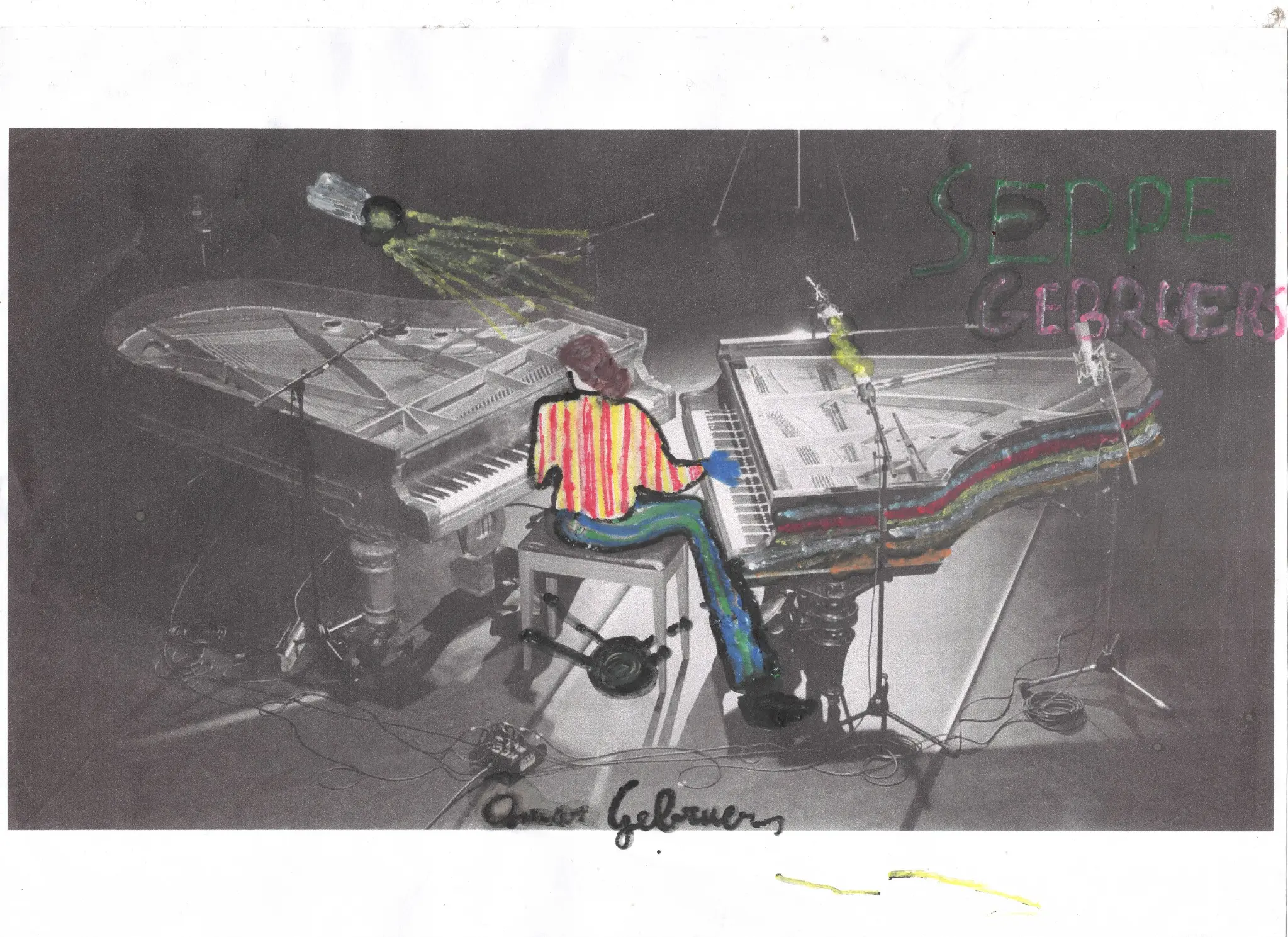
Two grand pianos tuned a quarter-tone apart. Standards approached as living material: remembered, displaced and played with.
Watch / listen
Triple LP · February 2026 · piano solo · 24-tone equal temperament
A standard does not remain outside the performance as a fixed model. It enters into the playing: as memory, resistance, habit and possibility.
Charlemagne Palestine & Seppe Gebruers · Konnekt · 2025
Playing with standards — solo, trio and portrait.
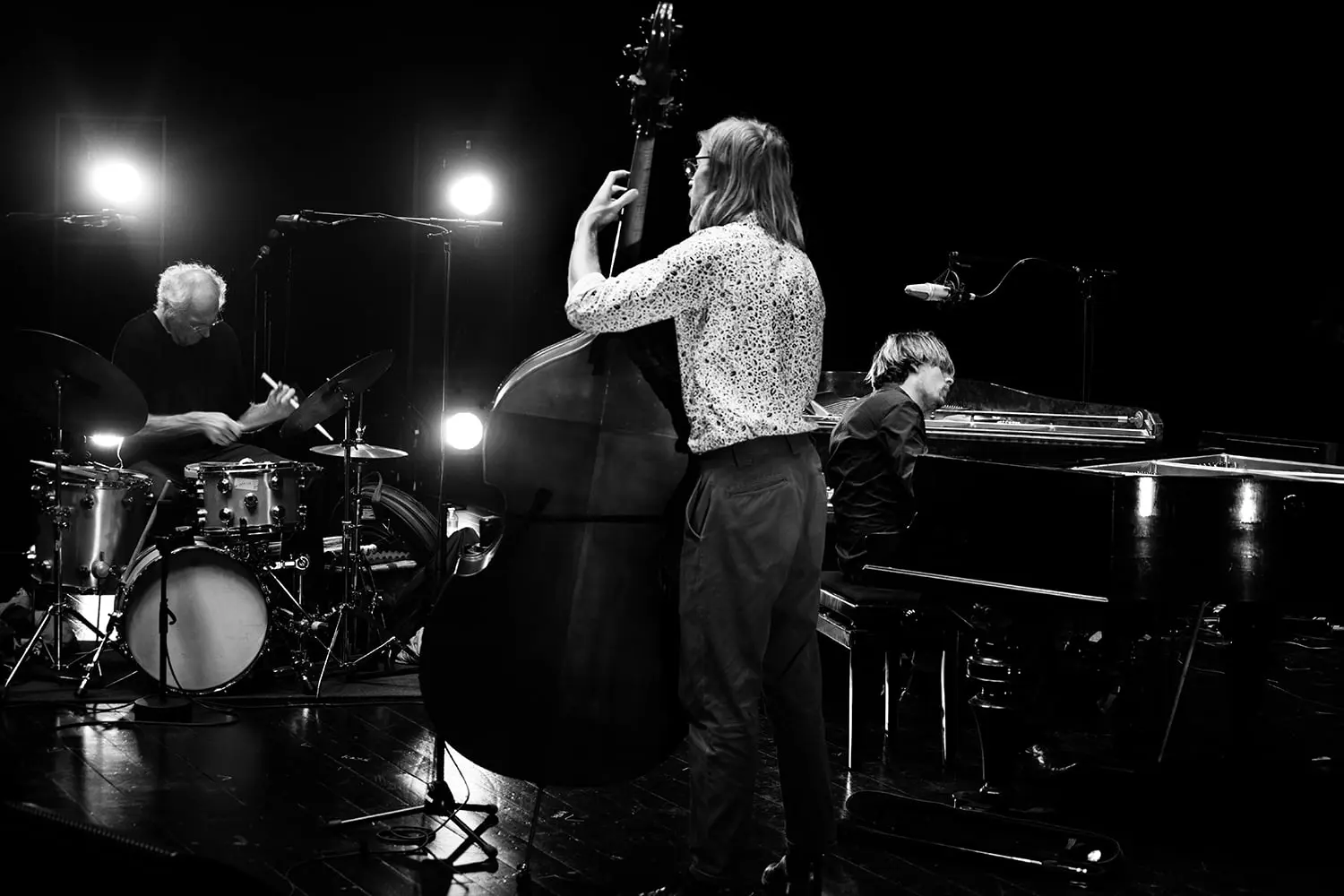
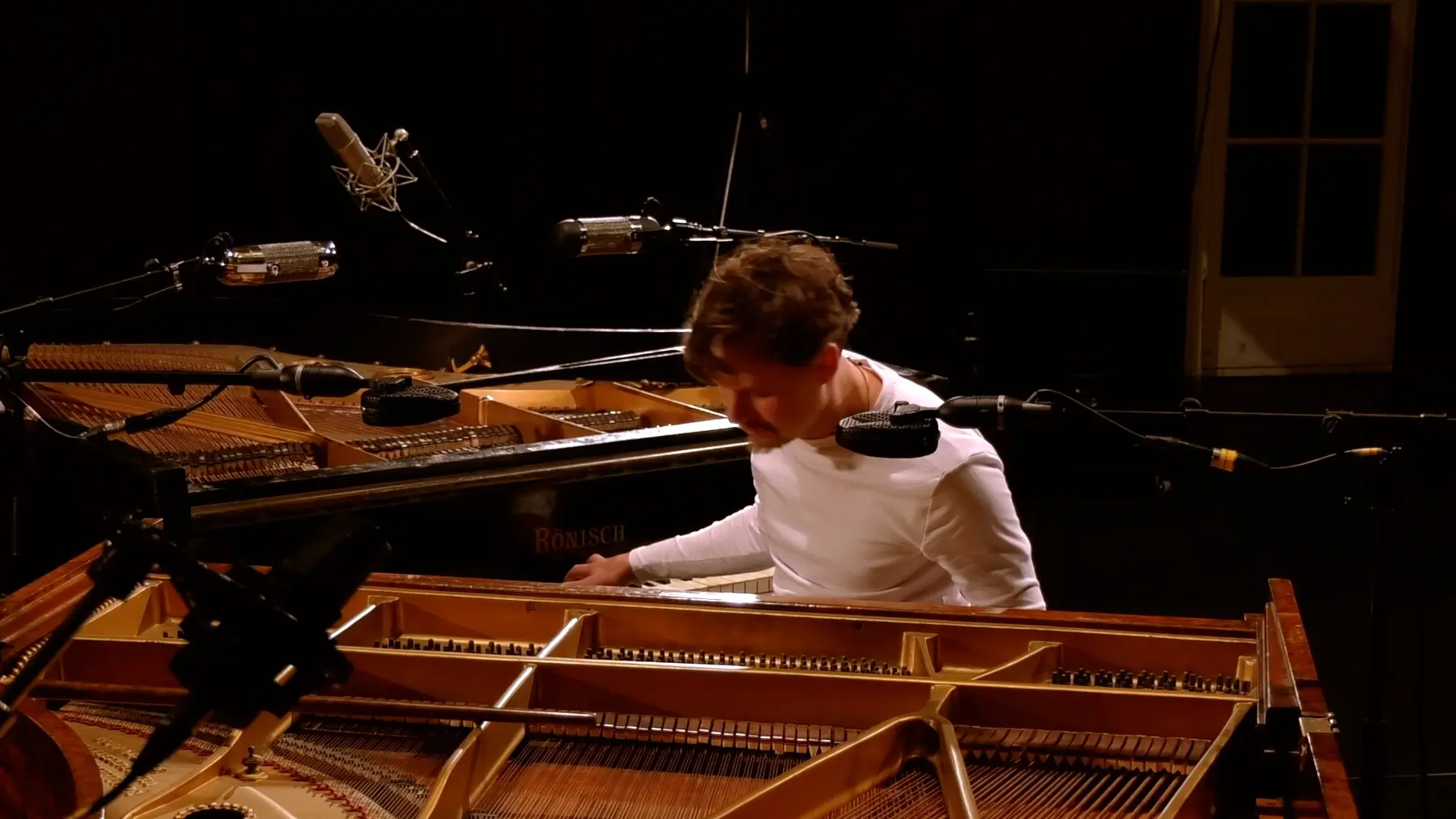
Underlying any artistic endeavour is an urge to interact – with an audience, with art history, with instruments and matter, one’s surroundings, other artists, oneself. This interaction, however, is not one between equal players: one person – the artist – is usually held responsible for the act. The composer composes a composition, the improviser improvises an improvisation, the performer performs a performance. This linear form of thinking does not fit in the interactive realm of music. Furthermore, terms like composition, improvisation or performance have a static character. While the musical experience is alive and always changing, these terms reduce it to objects. That is why I take ‘playing with …’ as a basis. We always play with something: a fellow musician, an idea, an instrument, acoustics, … Anything can be a symbolic playmate, as long as we acknowledge that it also plays with us; otherwise, we can only speak of manipulation. The same applies to the listener. Ideally, it is not the musical composition that dominates the listening experience, but rather the listener who is creatively activated, turning the experience into a state of play.
This research aims to increase an awareness of the hidden ways in which musical interactions behave. My method is phenomenological: the investigation of how things appear to the creator or listener. Literally, phenomenology is the study of “phenomena”: appearances of things, or things as they appear in our experience, or the ways we experience things, thus the meanings things have in our experience. If we are dealing with such complicated processes as perception, time-consciousness, imagination, memory, and play, it is impossible to explain them from reductions and isolated processes.
The artistic part of my research entails that I play with two pianos tuned a quarter-tone apart. Playing with this tonal tradition, which has dominated Western music for centuries and still constitutes the frame in which we listen, allows me to highlight the interactivity of the musical act. ‘Making a difference’ from the expectations and the familiar draws the attention and activates the listener, ideally activating them to create while listening.
Another confrontation with the familiar is the ‘Playing with standards’ project. Playing jazz standards or well-known songs and improvising over them is still the foundation of the curriculum in jazz music and is often the starting point for most Western improvisers. This tradition has a whole set of rules and stylistic conventions and can be seen as idiomatic improvisation. In other words, standards are treated as passive objects. In my artistic endeavour, I strive to see them as possibilities, shifting the focus to transformation, and interact with them as if they were living cells. In this sense, I treat them as simulacra: copies of copies without an original. Anything we perceive is always a representation, no original; standards are always transformed by the musician or listener.
By playing with standards, and shifting the focus from reproduction to transformation, I hope to expand the interactivity of the musical act, both in the act itself and the thought concerning it.
On mediation, interpassivity and the listener’s own musical experience.
ResidencyA two-season inquiry at De Bijloke into polyphony as shared, transforming experience.
Conversation · audioA conversation about multiple voices, tension and the musical field.
EssayAn argument for dialogue without consensus: between musicians, curators, researchers and listeners.
Conversation · podcastGuest: Seppe Gebruers · Interview: Thomas Jillings & Sanne Huysmans
Interview tape · audioAn audio interview with Charlemagne Palestine and Seppe Gebruers for Gonzo (circus).
Beyondddddd The Notessssss“Goes way beyond the notes, and, indeed, way beyond the rational.”
Christopher Nosnibor
Aural Aggravation
Beyondddddd The Notessssss“A rather unique work to hear.”
Bart Dujardin
Luminous Dash
Beyondddddd The Notessssss“Deeply resonant, transcendent layers of sound and silence.”
Squidco
Squidco
Beyondddddd The Notessssss“A four-headed, 428Hz-tuned, slightly-out-of-its-mind grand piano beast awakens.”
Marc Urselli
Chain D.L.K.
Playing with standards“It’s perhaps the most disturbing piano music I’ve ever heard — a glitch in the world sharing its physics.”
Stuart Broomer
Point of Departure
Playing with standards“The deeper you enter this universe, the more natural and richer it begins to feel.”
Stijn Bu
Gonzo (circus)
Drop Your Plans“This is work of acute, sinuous sensitivity.”
Tim Owen
Dalston Sound
Drop Your Plans“The music is cliché-free, melodic and emotional and can be enjoyed with both head and heart.”
Jakob Baekgaard
All About Jazz
Selected responses to Beyondddddd The Notessssss, Playing with standards and Bambi Pang Pang featuring Andrew Cyrille.
Inactuelles Salt Peanuts*“Seppe Gebruers is one of the crucial exponents of Belgian improvisation and a musician who has developed his own style and vision.”— Guy Peters
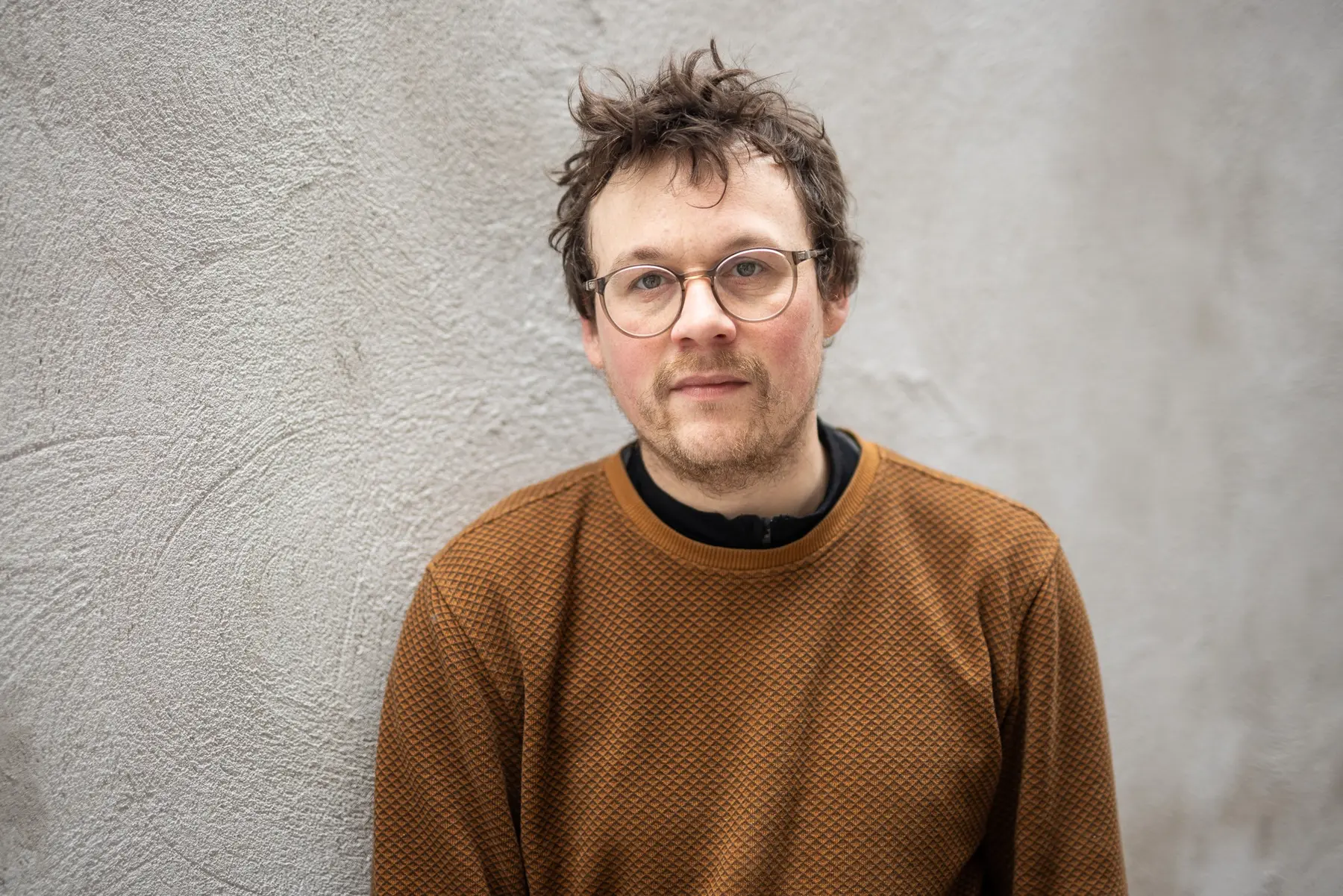
Seppe Gebruers (°9/05/1990) is a Belgian pianist, improviser, and composer.
Since 2016 he has played two pianos tuned a quarter-tone apart, exploring and introducing microtonal music in improvisation. He is known for adventurous projects including Ifa y Xango, the piano duo with Erik Vermeulen, Bambi Pang Pang featuring Andrew Cyrille, the duo with Charlemagne Palestine on four specially tuned pianos, the trio with free-improvisation pioneer Paul Lovens and Hugo Antunes, and the Playing with standards trio with Nils Vermeulen and Paul Lytton.
As a composer, he created music for the films Etangs Noirs and The Reconstruction, and for theatre with Tibaldus. He is the co-founder and artistic leader of Troika vzw. Since 2019 he has been a researcher and teacher at KASK & Conservatorium Ghent.